

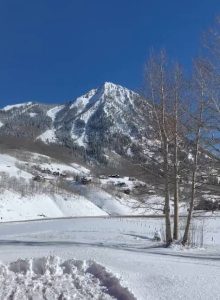
The latest recorded snow into the winter season was on December 5th, 2021. The following month, the north metro area experienced a huge fire known as the Marshall Fire.
We already had our first fire of the year, multiple high winds, schools cancelled, our finals postponed…. twice, and above average temperatures in January.
The last decade has seen intense amounts of snow and then practically no snow at all. In 2015-2016, we had a heavier year with 72.8 inches. The only thing consistent, has been the ebbs and flows of snowfall throughout the years.
 Inches of Snow in the Past Decade:
2016-2017: 21.8
2017-2018: 25.7
2018-2019: 48.1
2019-2020: 57.6
2020-2021: 80.2
2021-2022: 47.2
2022-2023: 44
2023-2024: 44.3
Water:
Colorado relies heavily on the Rocky Mountain’s snowfall each winter season.
The snow that we get in the mountains eventually melts during the spring and flows into rivers such as the Colorado River, South Platte, Arkansas, and Rio Grande.
When snowfall decreases, there is less water to store in the later year.
The decreasing snowfall in Colorado has a major impact on the state and a large part of the Western United States.
Ski & Tourism:
Our ski industry is taking a turn for the worse this year.
As the U.S Department of Agriculture and pure logic explain, when there is less snow, ski resorts open later and close earlier.
Fewer ski days means fewer tourists which is a huge impact for Colorado’s economy.
Although we may think that fewer people are better for our own personal skiing experience, the more people that we have on the mountain, the better our Colorado economy will thrive.
Impacts:
One of the more difficult years for water storage and ski resort tourism was 2017-2018.
Although this wasn’t one of the worst years for tourism, drought.gov showed that tourism rates went increasingly down the following year in 2018-2019 due to bad snowpack in the previous year.
We are already seeing a significant drop in tourism for our season of 2025-2026, meaning that statistically it will only get worse in following years.
Another negative impact shown in the spring of 2018, the run-off was well below average.
This affected water usage in multiple cities, a stress on agriculture, and a negative outcome to the ecosystem.
Even though 2017-2018 wasn’t the most catastrophic year of snowpack, it did have a hugely negative impact on the ski conditions and later water availability.
The future:
The low precipitation, hotter temperatures, drought conditions, high winds, and increased wildfire outbreaks are not looking optimistic for this summer’s fresh water production.
So, if you want to do anything to help make things better for the future, lower water use, reduce greenhouse gas emissions, protect forests, spread tourism, and most importantly spread awareness for the cause.